When they are removed
When the lipoma is growing, hurts, causes pressure, gets in the way of everyday life or raises doubts about the diagnosis. A lump that does not press on neighbouring structures and causes no symptoms does not need treatment.
From assessing the lesion to choosing the treatment and removing the lipoma — all in one place.
A lipoma is a benign tumour made of mature fat cells, surrounded by a thin capsule. Before the procedure the doctor assesses the lump, establishes the medical indications and chooses the treatment method. Lesions lying just under the skin are removed surgically, under local anaesthesia, together with the capsule.
The doctor assesses the lump and establishes the medical indications. Lipomas lying just under the skin are removed surgically, together with the capsule.
Others offer removal of skin lesions as one of their many services.
We specialise in this.
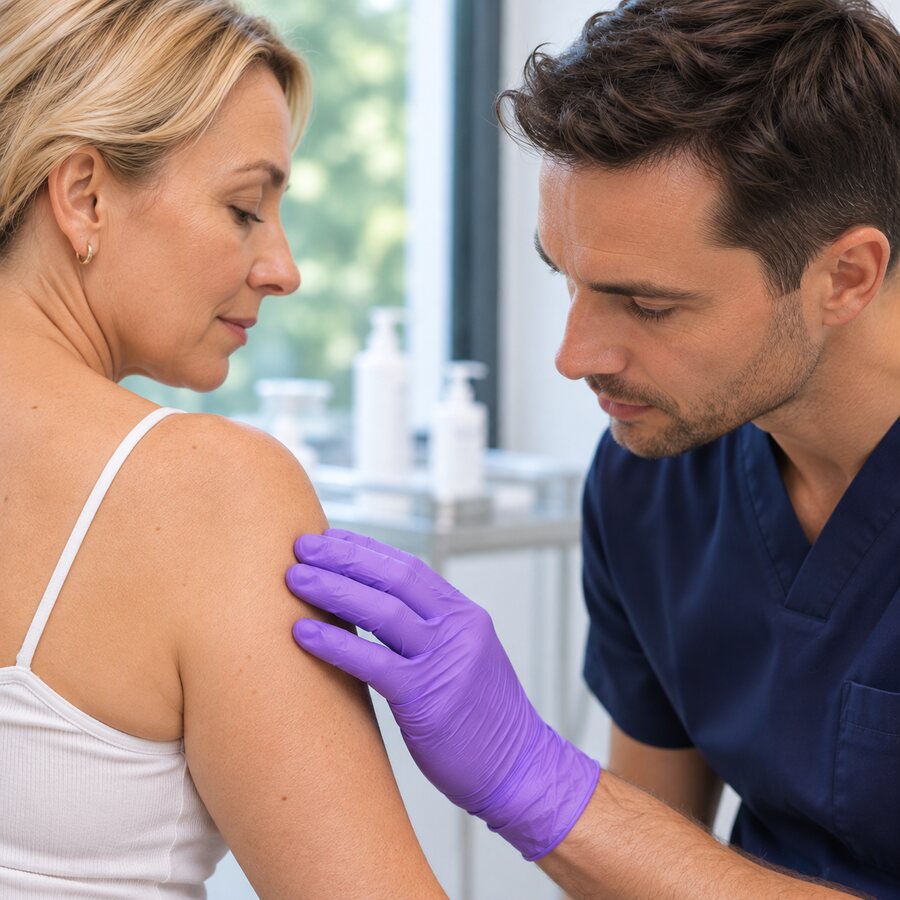
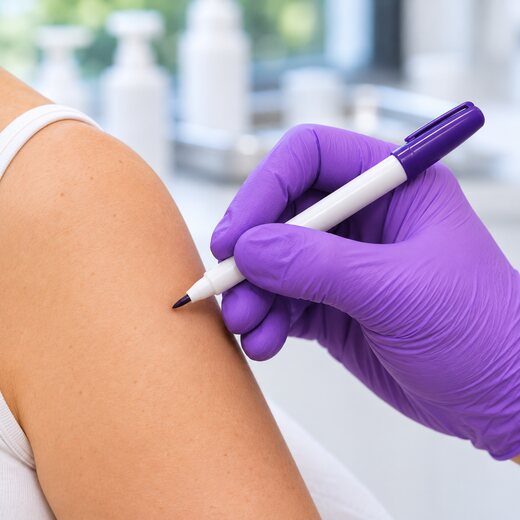

The treatment method is always chosen by the doctor after examining the lesion and establishing the medical indications.
When the lipoma is growing, hurts, causes pressure, gets in the way of everyday life or raises doubts about the diagnosis. A lump that does not press on neighbouring structures and causes no symptoms does not need treatment.
A lipoma lying just under the skin is removed surgically, under local anaesthesia, with histopathology. The doctor makes an incision in the skin over the lump, shells out the lipoma together with its thin capsule and stitches the wound.
The first stage of healing usually takes 2–3 weeks. The doctor sets the date for removing the stitches, and the follow-up and stitch removal are included in the price of a procedure carried out with us. The scar continues to remodel for another 6–12 months and gradually fades.
After a properly performed excision with the capsule, local recurrence is rare. Removing one lipoma does not, however, protect against another appearing elsewhere. A lump that grows back at the site of the procedure must always be shown to a doctor.

We do not remove a large or deep-lying lump in the treatment room — in that case the doctor will indicate which imaging test to have and where to plan the procedure.
Procedures are performed on patients aged 6 and over.
| Size and location | First lesion | Each further lesion, same visit |
|---|---|---|
Up to 1.5 cm trunk, limbs | First lesion580 zł | Further, same visit350 zł |
Over 1.5 cm or in a special location face, head, hands, feet, intimate areas | First lesion680 zł | Further, same visit400 zł |
A full-body mole check for adults and children, plus any follow-up recommended by the doctor.
Laser treatment of seborrhoeic keratoses, skin tags, viral warts and other skin lesions that cause health complaints.
| Skin lesion | First lesion | Each further lesion, same visit |
|---|---|---|
Up to 0.5 cm trunk, limbs | First lesion390 zł | Further, same visit80 zł |
Over 0.5 cm or in a special location face, neck, décolletage, hands, feet, intimate areas | First lesion460 zł | Further, same visit100 zł |
Viral wart with extensive lesions, the doctor decides how many sessions are needed | First lesion460 zł | Further, same visit100 zł |
For patients with a confirmed skin cancer diagnosis.
Think of the people closest to you and send them for preventive skin cancer screening today.
A lipoma is a soft, movable lump under unchanged skin that grows slowly and usually does not hurt. It is most often located on the trunk and the upper limbs.
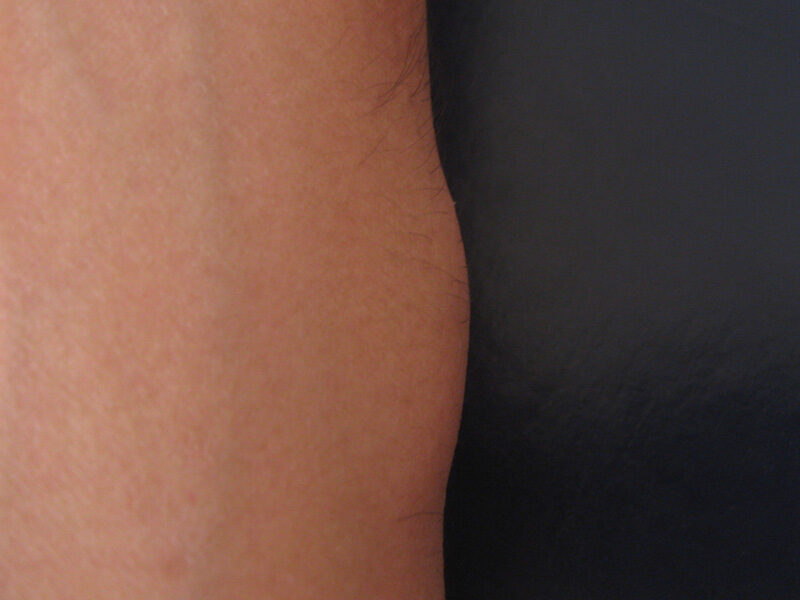
The photographs come from Wikimedia Commons and are shown rescaled; the author and licence are given under each photograph.
Do you have a similar lesion on your skin? The diagnosis and the treatment method are decided by the doctor after examining it.
Prices and appointmentsSince 2019 we have concentrated on a single field. We examine skin lesions, document them, remove them and provide histopathology — and, where needed, an oncology consultation.
We created our skin lesion diagnostics programme ourselves and obtained accreditation for it from the Supreme Medical Council of Poland. Only doctors practising at Twoje Znamiona take part in it, which is how we work to one diagnostic standard.
We built our own software, which links your examination result, your medical records and the next stages of care. The system runs only in our centres, so this continuity of care is available to Twoje Znamiona patients alone.
During the examination, the doctor's assessment is supported by a certified AI system. If a lesion raises doubt, the doctor sends its image for a structured second opinion within our nationwide team.
If the doctor recommends an earlier follow-up, a visit within 6 months costs markedly less. Price should not be the reason to put off an examination you have been advised to have.
We are building a nationwide network specialising in skin lesion diagnostics and steadily adding new centres. The examination standard, the doctors' training and the way we work are set across the whole organisation — not one practice at a time.
average across all Google reviewsA pleasant place, a kind doctor, a professional approach. She explained everything clearly and patiently. I felt very comfortable. I recommend it wholeheartedly.
Recommended. The doctor was very kind and friendly and explained everything thoroughly and clearly. I had three lesions excised in one visit. Simply great — I will certainly be back at the practice more than once.
A very professional approach. The doctor explained the options for removing the mole and chose the most suitable technique. The procedure itself was quick and painless.
We ask every patient for a detailed review after their visit.
You choose the service and the time yourself — no waiting for a phone call.
The Mole Screening Centre is in the same arcade as the Czuby Housing Cooperative, opposite the PKO BP bank.
They work to our single diagnostic standard — the one we set out in our own training programme, accredited by the Supreme Medical Council and available only to doctors practising at Twoje Znamiona.

Not always. A typical, small lipoma that is not growing and does not press on nerves or other structures does not need treatment. It is removed when it is growing, hurts, causes pressure, gets in the way of everyday life or raises doubts about the diagnosis. The doctor decides on removal after assessing the lesion and the symptoms.
A doctor usually recognises a typical lipoma on examination: it is a soft, rubbery, movable lump under unchanged skin. When there are doubts, the doctor orders imaging, for example an ultrasound scan. Final confirmation comes from histopathology of the removed lesion.
We do not promise to remove every lipoma. In the treatment room we remove lumps lying just under the skin, after qualification by the doctor. If the lump is large, lies deep or its appearance raises doubts, the doctor will indicate which test to have and where to plan the treatment, sometimes in a hospital setting.
The CO₂ laser used to remove lesions in the skin does not reach a lipoma, because it lies deeper, in the subcutaneous tissue. That is why we remove lipomas surgically. We do not perform laser lipolysis or liposuction of lipomas at our centres.
The doctor assesses the lump at a surgical consultation and chooses the method in line with current guidelines. A lipoma lying just under the skin is removed under local anaesthesia, with histopathology: the doctor makes an incision in the skin over the lump, shells out the lipoma together with its thin capsule and stitches the wound. The histopathology result is usually available within 14–21 days.
A lipoma lying just under the skin is removed under local anaesthesia. Tenderness usually appears when the anaesthetic wears off and should ease from day to day. Pain that increases after a few days instead of easing is a sign to contact a doctor.
Yes. The first lesion is charged at the standard rate, and every further lesion excised during the same visit at the lower rate for an additional lesion. The doctor decides how many lesions can be removed in one visit, taking their size and location into account.
Wear comfortable clothing that gives easy access to the area being treated. Tell the doctor about any medication you take — especially blood thinners — and about allergies, including to anaesthetics. If anything needs to change, the doctor will say so during qualification.
Surgical removal of a lipoma lying just under the skin costs from PLN 580: PLN 580 for a lesion up to 1.5 cm on the trunk or limbs and PLN 680 for a larger one or one on the face, head, hands, feet or intimate area. Histopathology is PLN 150, and the follow-up and stitch removal are included in the price of a procedure carried out with us. A surgical consultation costs PLN 200 and is included in the price of the procedure if it takes place during the same visit. A large or deep lipoma may require imaging tests and a procedure in hospital, so the doctor gives the exact price after the qualification.
On the NFZ, lipomas are removed if a doctor considers the procedure medically justified, for example when the lipoma is growing, hurts, causes pressure or raises doubts. A referral to a surgical outpatient clinic is needed, most often from a family doctor. At our centre in Lublin procedures are paid for according to the price list on this page, and no referral is required.
You can see the available slots straight away in the booking calendar, with no phone call and no waiting to be called back. Online booking works around the clock.
The first stage of healing usually takes 2–3 weeks. The doctor sets the date for removing the stitches. The scar continues to remodel for another 6–12 months and gradually fades. After a larger lipoma is removed, a thickening or a slight hollow can sometimes be felt for a few weeks where the lump was.
After a properly performed excision with the capsule, local recurrence is rare. Nor does removing one lipoma protect against another appearing elsewhere, especially in people with a tendency to multiple lesions. A lump that grows back at the site of an earlier procedure must always be shown to a doctor.
While the wound is healing, avoid soaking it, strenuous exercise and swimming pools, and keep the fresh scar out of the sun. You receive detailed instructions from the doctor after the procedure, matched to where the lesion was.
There is no single rule. With office work and a small wound, sick leave is often not needed or lasts a few days; with physical work it is longer. The doctor decides after the procedure, taking into account where the wound is and the kind of work you do.
You choose the service and the time yourself — no waiting for a phone call.
Your call will be answered by our virtual assistant. It can book, reschedule or cancel an appointment and add you to the waiting list. For anything more complex, it can connect you to Patient Services during the centre's opening hours.
+48 732 106 685Email us if you need more information about the examination or your enquiry is more complex. We reply within 24 hours on working days.
zbadamy@twojeznamiona.pl Call now


